October 1, 2026 Post by : Editorial Coastal Life
Coastal Ghost Villages: The Towns the Sea Took Back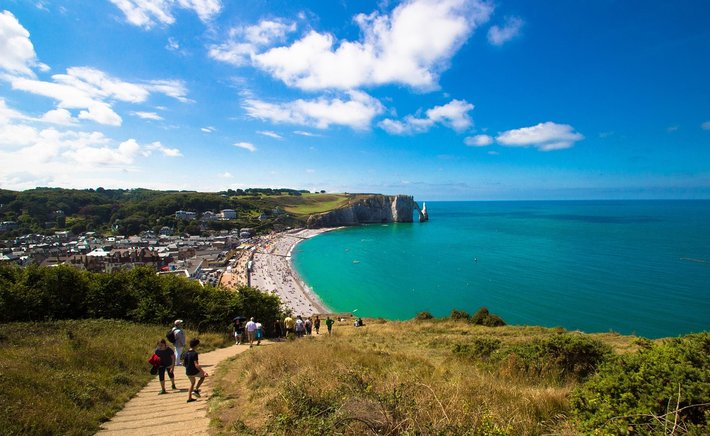
Ask an old fisherman how he found his way home in fog and he might shrug and say he just knew. That answer hides a lifetime of learning. Coastal people built up, generation by generation, an intimate mental map of their shoreline that no printed chart could fully capture. It was a kind of literacy, and like any language it had to be learned young.
The basics were landmarks: a particular gap in the cliffs, a church tower, a lone tree bent permanently east by the wind. Three landmarks in line told you exactly where you were. Fishermen memorized dozens of these alignments, called ranges or transits, and used them the way a modern skipper uses a screen. A rock that never showed above water might still announce itself by the way swell broke over it, and every local knew which patches of sea were safe at which tide.
The Signs That Were Not on Any Chart
Beyond landmarks, there were living signs. The colour of the water told you depth and bottom: green over sand, brown over mud, dark blue-black over rock. Gulls working a certain way meant a shoal of fish below. A change in the smell of the air, that faint cold breath off a hidden headland, warned of a shift in wind. Old fishermen spoke of reading the sea the way a farmer reads a field.
Weather sense was part of the same skill. A halo round the moon, a backing wind, the way the swell came in long and oily after a distant storm: all of it fed into a judgement about whether to go out. That judgement was not superstition, though outsiders often mistook it for that. It was pattern recognition built from thousands of days on the same water, sharpened by the fact that being wrong could kill you.
Place names carried the knowledge too. Almost every coast has its Deadman's Point, its Widow's Rock, its Hags' Reef. These names are not decoration. They are compressed warnings, and they survive because they were useful. When a community was cleared or a harbour silted up and the boats moved away, the names often stayed on the maps, orphaned but stubborn.
What Was Lost and What Remains
The arrival of reliable echo sounders, radar, and satellite navigation was, on balance, a gift. Far fewer boats are lost now, and a young skipper is not expected to inherit twenty years of local knowledge before being trusted with a crew. But something did go out of the trade when the screen replaced the shoreline. Navigating by instrument is a conversation with a machine; navigating by coast is a conversation with a place.
Some of the old knowledge survives in fishing families, in harbour talk, in the way a skipper still glances at the birds before checking the forecast. And it survives in the names. Sail past a headland called the Sow's Back or the Drowned Man and you are reading a sentence written by people who knew that coast with their whole bodies, and who wanted you to know it too.
Author

22 feb,2025
This incident opened my eyes to the value of Insurance in general, so I decided to examine my personal and business insurance.



Comment (3)
The payments are made directly from one person to another without passing through a central bank or clearing house.
22 feb,2025
ReplyThe Women Who Waited: Life Ashore in a Whaling Town
23 feb,2025
ReplyFog Signals and the Sound of the Coast
23 feb,2025
Reply