September 19, 2026 Post by : Editorial Maritime History
The Salt Roads: How Sea Trade Shaped Inland Towns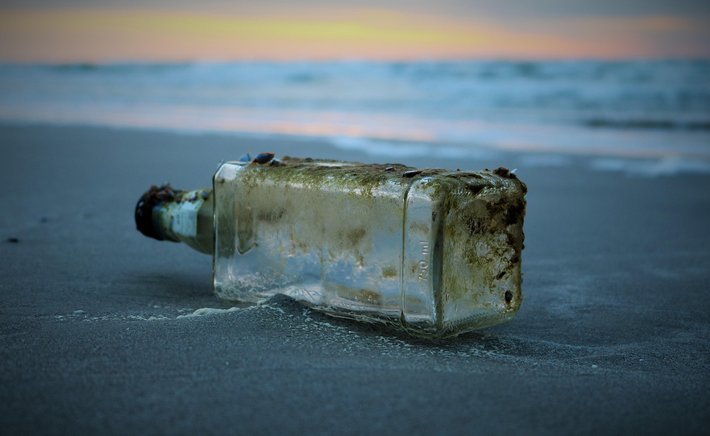
There is perhaps no more romantic image in maritime lore than a glass bottle bobbing on open water, a rolled slip of paper sealed inside. Long before ships carried radios, and centuries before satellites stitched the oceans into a single web of communication, the sea itself was sometimes the only postal service a sailor had. The practice of casting messages into the water—whether as a deliberate call for help, a scientific experiment, or a final farewell—stretches back at least to the sixteenth century, when navies began using it as an informal way to report positions and disasters.
The logic was simple and deeply uncertain. A bottle dropped off the coast of Spain might wash up in Ireland, or it might sink within sight of the ship that threw it. Currents, winds, and sheer chance decided everything. That uncertainty is precisely what makes surviving message bottles so compelling to historians: each one is a small, accidental artifact of a voyage that might otherwise have left no trace at all.
The Admiralty's Gambit
By the eighteenth and nineteenth centuries, message bottles had become semi-official instruments. Naval officers in several countries were instructed to write their ship's name, position, and date on a slip of paper, seal it in a bottle, and drop it overboard when they suspected they might be lost. Anyone finding such a bottle was usually asked to forward it to the nearest port authority or admiralty office. Some governments even offered a small reward—often a shilling or two—to encourage strangers to take the trouble.
These rewards created a strange economy of beachcombing. Coastal families learned which coves caught the most flotsam, and a find could mean a few coins, a bit of news, or occasionally a place in a newspaper story. The bottles that made it to shore were dutifully delivered, copied into ledgers, and sometimes used to reconstruct the last known movements of a vessel that never returned. In that sense, a message bottle could function as a slow-motion distress signal, arriving weeks or months after the disaster it described.
Science, Sentiment, and the Long Drift
Message bottles were not only for emergencies. Oceanographers and hydrographers adopted them as cheap drift markers, releasing thousands of bottles to map currents that ships could not easily trace. Each recovered bottle added a data point, and the sometimes bizarre routes they took helped reveal how surface water moved around continents. Fishermen, lighthouse keepers, and curious children became unwitting contributors to this early ocean science, often without ever meeting the researchers who had set the bottles adrift.
For ordinary sailors, though, the impulse was often more personal. A message might be a letter to a sweetheart, a prayer, or a simple record of a day at sea. Many were written with no expectation of reply, only the hope that someone, someday, would know the writer had been there. That blend of practicality and poetry is what keeps the tradition alive in our imagination. Even today, people still drop bottles into the sea, and people still find them—sometimes decades later, sometimes on the other side of the world. The currents have not changed, and neither has the human need to send a small piece of ourselves out into the unknown.


Author

22 feb,2025
This incident opened my eyes to the value of Insurance in general, so I decided to examine my personal and business insurance.

Comment (3)
The payments are made directly from one person to another without passing through a central bank or clearing house.
22 feb,2025
ReplyFog Signals and the Sound of the Coast
23 feb,2025
ReplyThe Salt Roads: How Sea Trade Shaped Inland Towns
23 feb,2025
Reply